 Pin It
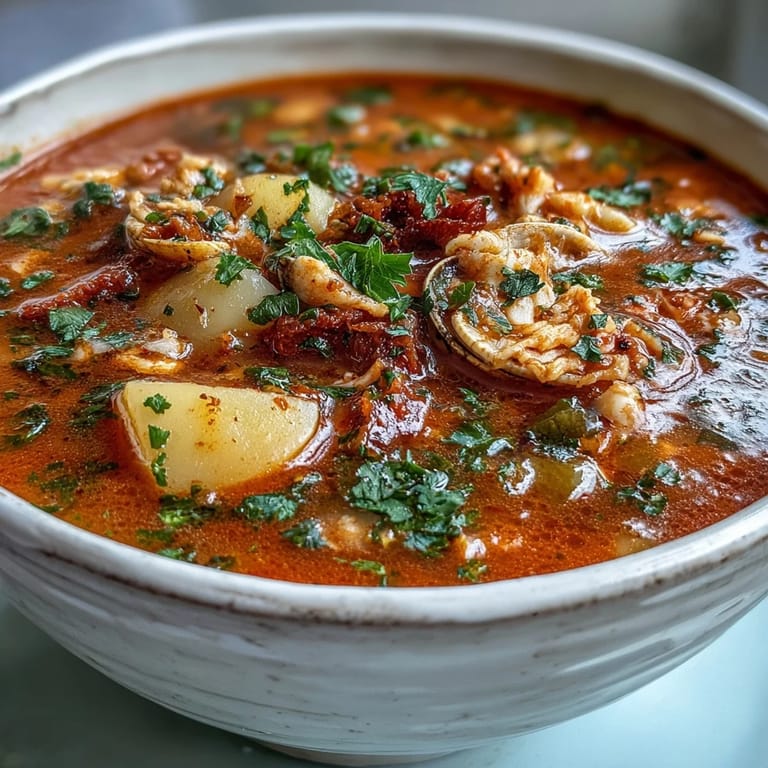
 There's something about the smell of clams steaming open that pulls me straight back to a crowded fish market in lower Manhattan, where I watched a vendor ladle bright red chowder into paper cups for rushed commuters. I'd always assumed clam chowder had to be cream-heavy and complicated, but that first spoonful of tomato-based broth, studded with tender clams and soft potatoes, changed everything. It was lighter, brighter, and somehow more honest than I expected. Since then, I've made this version countless times, especially on nights when I want something warm and deeply satisfying without the heaviness.
I made this for my sister on a random Tuesday evening when she mentioned missing seafood since moving inland, and watching her face as she took that first spoonful—eyes closing, shoulders relaxing—reminded me that the best meals aren't the ones that take all day. Two hours from ingredient to table, and suddenly we were lost in conversation for another three, bowls empty and bread crumbs everywhere.
Ingredients
- Fresh clams (2 pounds littlenecks) or canned clams (3 cups, drained): Fresh clams release their own briny liquid as they steam, which becomes liquid gold for your broth—this is non-negotiable flavor. If using canned, that reserved juice still matters.
- Clam juice (3 cups): This is your umami backbone; don't skip it or substitute water. Use the reserved clam steaming liquid first, then fill with bottled juice.
- Canned diced tomatoes (28 ounces with juice): The acidity and brightness define Manhattan chowder—this is what separates it from cream-based versions and makes it sing.
- Olive oil (2 tablespoons): Just enough to coat your vegetables without making the soup feel greasy, letting the flavors stay clean and direct.
- Onion, celery, carrots, bell pepper (1 large onion, 2 celery stalks, 2 carrots, 1 bell pepper): This is your soffritto base, and taking time to dice everything evenly means even cooking and balanced flavor in every spoonful.
- Yukon gold potatoes (3 medium, peeled and diced): These potatoes hold their shape during the long simmer without turning to mush, and their buttery texture complements the briny clams perfectly.
- Garlic (3 cloves, minced): Added after the vegetables soften so it perfumes the pot without burning or turning bitter.
- Thyme, oregano, bay leaves (1 teaspoon each dried thyme and oregano, 2 bay leaves): These dried herbs infuse the broth with herbaceous warmth; the bay leaves add subtle depth and must be removed before serving.
- Red pepper flakes (½ teaspoon, optional): A whisper of heat that awakens the palate without overpowering the delicate clam flavor.
- Kosher salt and black pepper (¾ teaspoon salt, ½ teaspoon pepper): Taste before adding more salt since clam juice and canned tomatoes already carry sodium.
- Fresh parsley (2 tablespoons, chopped): A final verdant shower that adds brightness and signals that this is a living, thoughtful dish.
Tired of Takeout? 🥡
Get 10 meals you can make faster than delivery arrives. Seriously.
One email. No spam. Unsubscribe anytime.
Instructions
- If using fresh clams, give them a good scrub:
- Run them under cold water and use your hands or a stiff brush to clean off any sand or debris clinging to the shells. Listen for the shells to click shut when you handle them—this tells you they're alive and ready to cook.
- Steam the clams open gently:
- Place scrubbed clams in a large pot with 1 cup of water, cover with a lid, and set the heat to medium-high. In about 5–7 minutes, you'll hear them opening and smell the ocean. As soon as they've all opened, remove them with a slotted spoon and set aside to cool.
- Harvest the clam meat and strain the liquid:
- Once cool enough to handle, shuck the clams and chop them into bite-sized pieces. Pour the cooking liquid through a fine strainer to catch any grit, then reserve it—this is liquid gold.
- Warm your oil and begin building the base:
- Heat olive oil in your large pot over medium heat until it shimmers. Add the chopped onion, diced celery, carrots, and bell pepper all at once, stirring occasionally until the vegetables soften and the onion turns translucent (6–8 minutes). Your kitchen should smell like a New England fishing town by now.
- Add the garlic and let it wake up the pot:
- Stir in the minced garlic and cook for just 1 minute, letting the fragrance bloom without allowing it to brown or turn acrid.
- Build the broth layer by layer:
- Add the diced potatoes, canned tomatoes with their juice, the 3 cups of clam juice, your reserved clam cooking liquid, dried thyme, oregano, bay leaves, red pepper flakes (if using), salt, and black pepper. Stir everything together so nothing sticks to the bottom.
- Bring it to a boil, then settle into a gentle simmer:
- Let it reach a rolling boil for a moment, then lower the heat and leave the pot uncovered to simmer for 20–25 minutes. The potatoes should be fork-tender by the end, and the broth should taste balanced and deep.
- Finish with the clams:
- Gently stir in your chopped clams and simmer for just 3–5 minutes more—any longer and they'll toughen. Taste for seasoning and adjust with salt or pepper if needed.
- Remove the bay leaves and serve:
- Fish out the bay leaves with a spoon or fork. Ladle the chowder into bowls, garnish generously with fresh parsley, and serve while steaming hot, preferably with bread for soaking up the last drops.
 Pin It
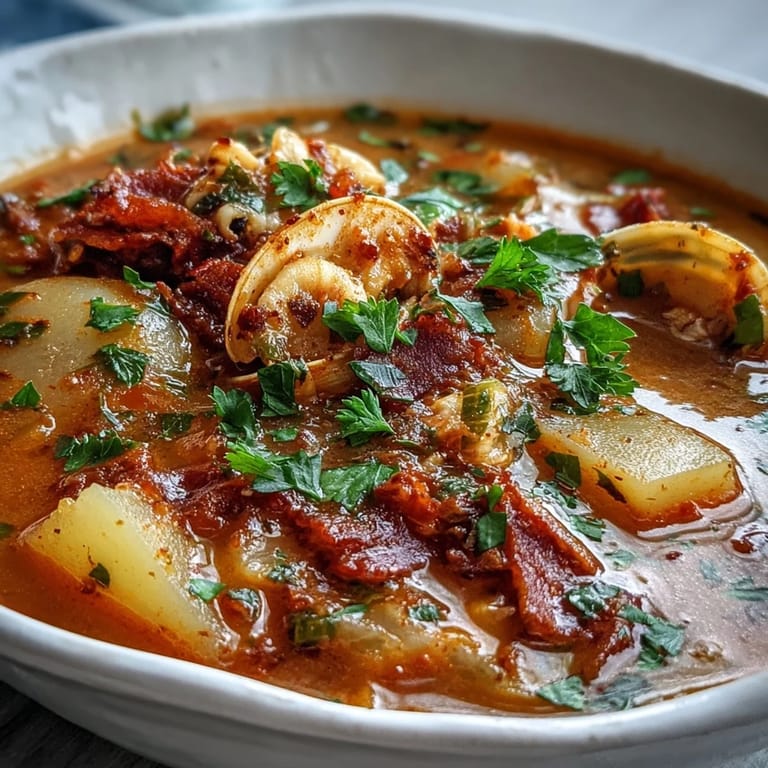
 My neighbor once asked why I bothered making soup from scratch when there's a restaurant around the corner, and I realized I didn't have a great answer until I watched her taste it. There's something about the act of steaming open clams, watching the vegetables soften and perfume the kitchen, that transforms cooking from a chore into a small ritual—the kind that reminds you why you love feeding people.
Fresh Versus Canned: What I've Learned
The first time I made this with canned clams out of laziness, I was prepared to be disappointed, but honestly, the result was nearly identical and infinitely less stressful. Fresh clams have a briny, mineral quality that feels luxurious, and the theater of steaming them open in your pot is undeniably satisfying, but canned clams—drained and chopped—deliver the same tender texture and flavor. The real trick is that you reserve their juice, which carries the same oceanic character. Use fresh clams when you have access and time; use canned without guilt on weeknight evenings.
Why the Tomato Base Matters More Than You Think
New England clam chowder is all cream and bivalves, heavy and pale—beautiful in its own right, but Manhattan chowder does something different. The tomato brings acidity that cuts through the briny clam flavor without competing; instead, it complements and elevates it. That bright red color signals to your brain that this is a lighter, more refreshing soup, and your palate responds accordingly. The canned tomatoes' juice becomes part of your liquid, so don't drain them.
Building Flavor Properly, From Start to Finish
Every element of this soup exists in a specific order for a reason, and cutting corners on the sequence actually costs you flavor. Starting with olive oil and vegetables creates a soffritto base that's been developing deep flavor for 6–8 minutes before you add anything else. The garlic joins briefly, just long enough to perfume but not burn. Only then does the liquid arrive, carrying the vegetables' sweetness and the garlic's warmth into the broth. That's when the potatoes begin their gentle transformation, and the dried herbs have time to infuse properly.
- Taste the soup twice: once after the potatoes finish cooking and once after the clams have simmered through, adjusting salt and pepper thoughtfully both times.
- Fresh parsley scattered on top at the end tastes completely different from parsley simmered in the pot for twenty minutes—it adds green brightness that keeps the finished soup from feeling heavy.
- Serve it hot in preheated bowls; this soup loses its soul quickly if it cools down.
 Pin It
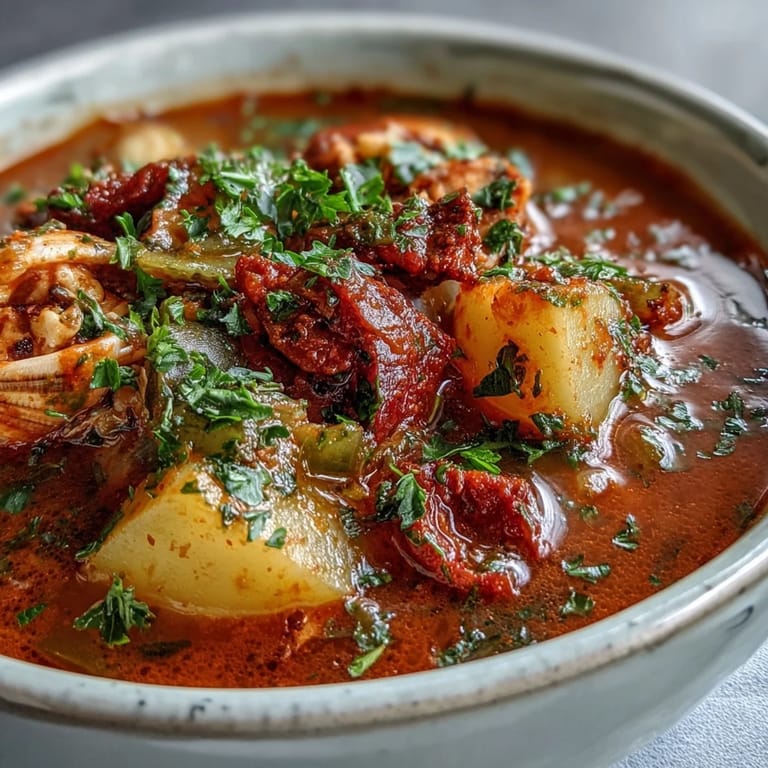
 This soup has become my go-to meal for moments when I want to feel grounded—when the weather turns cold or a friend needs something nourishing, or when I'm just cooking for myself and want to remember why I love being in the kitchen. Make it once and it becomes part of your rotation.
Recipe FAQs
- → Can I use canned clams instead of fresh?
Yes, you can substitute 3 cups of canned chopped clams for fresh. Be sure to drain and reserve the juice to use in the broth base.
- → What makes Manhattan clam chowder different from New England?
Manhattan clam chowder features a tomato-based broth that's lighter and tangier, while New England uses a cream base for a richer, thicker consistency.
- → How do I properly clean fresh clams?
Scrub clams thoroughly under cold running water to remove any sand or debris. Discard any clams that remain open when tapped or have cracked shells.
- → Can I make this chowder ahead of time?
Yes, you can prepare this chowder up to 2 days in advance. Store in an airtight container in the refrigerator and reheat gently on the stovetop before serving.
- → What are the best potatoes to use?
Yukon gold potatoes work wonderfully as they hold their shape well during simmering and add a buttery flavor. Red potatoes are also a good alternative.
- → How can I add more depth of flavor?
Add 2 ounces of diced cooked bacon with the vegetables for a smoky dimension, or include a splash of dry white wine when adding the tomatoes.