 Pin It
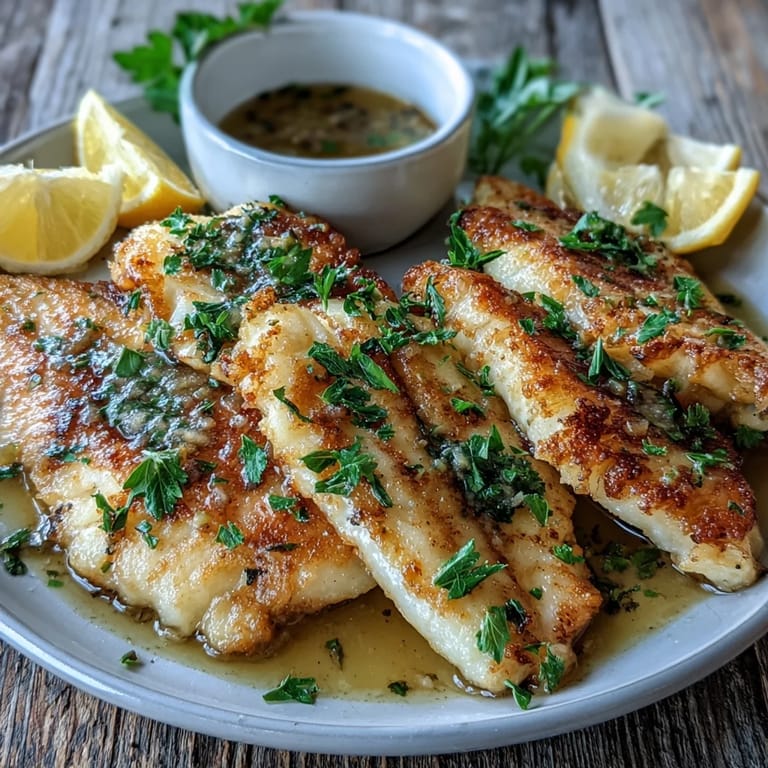
 My first flounder meunière moment happened on a Tuesday night when I'd promised myself to cook something that didn't feel like work. The fish counter at the market had these pristine fillets that practically glowed under the lights, and something about their delicate thickness made me think of my grandmother's Paris stories. Twenty minutes later, I understood why she'd raved about this dish for decades—it's the kind of elegant simplicity that rewards patience rather than fuss.
I made this for my partner on an ordinary Thursday after a long work week, and watching their face when that nutty butter sauce hit the fish reminded me why cooking matters. There was something almost meditative about the whole process—the gentle sizzle, the way the butter foamed, the smell when it turned golden. We finished the plate and barely talked, just existing in that quiet moment together, lemon wedges squeezed over everything.
Ingredients
- Flounder fillets: Look for fillets that are about the same thickness so they cook evenly; thinner sections will finish before thicker ones, leaving you with dry spots.
- Kosher salt and black pepper: Season generously before dredging because the flour layer mutes flavors, and fresh cracked pepper makes an actual difference here.
- All-purpose flour: The flour creates that delicate golden crust that keeps the fish tender inside while giving you textural contrast.
- Unsalted butter and olive oil: Butter alone burns too easily, so the olive oil keeps the pan temperature stable while the butter brings that rich flavor.
- Browned butter: This is the soul of the dish—watch it carefully as it transitions from melted to golden to nutty brown, about 2 to 3 minutes of focused attention.
- Fresh lemon and parsley: These finish the sauce with brightness, cutting through the richness and making every bite feel alive.
Tired of Takeout? 🥡
Get 10 meals you can make faster than delivery arrives. Seriously.
One email. No spam. Unsubscribe anytime.
Instructions
- Prepare and season your fish:
- Pat each fillet dry with paper towels—moisture is the enemy of that golden crust. Season both sides with salt and pepper, letting it sit for just a moment so the seasoning adheres.
- Dredge with intention:
- Place flour on a shallow plate and coat each fillet lightly, shaking off any excess that would burn and taste bitter. You want a whisper of flour, not a heavy coating.
- Build your cooking heat:
- Heat the butter and olive oil together over medium-high heat until the butter is foamy and smells rich—this is when you'll know it's ready for the fish.
- Cook the fillets to golden perfection:
- Once the fillets hit the pan, resist the urge to move them; let them rest for 2 to 3 minutes until they're golden underneath, then flip gently and cook the other side. You'll know they're done when they flake easily and have lost their translucent quality.
- Make the magic happen:
- Transfer the cooked fish to a warm platter, wipe out the skillet, then add fresh butter over medium heat. Watch it carefully as it melts and browns, listening for the nutty aroma that signals it's ready.
- Finish with brightness:
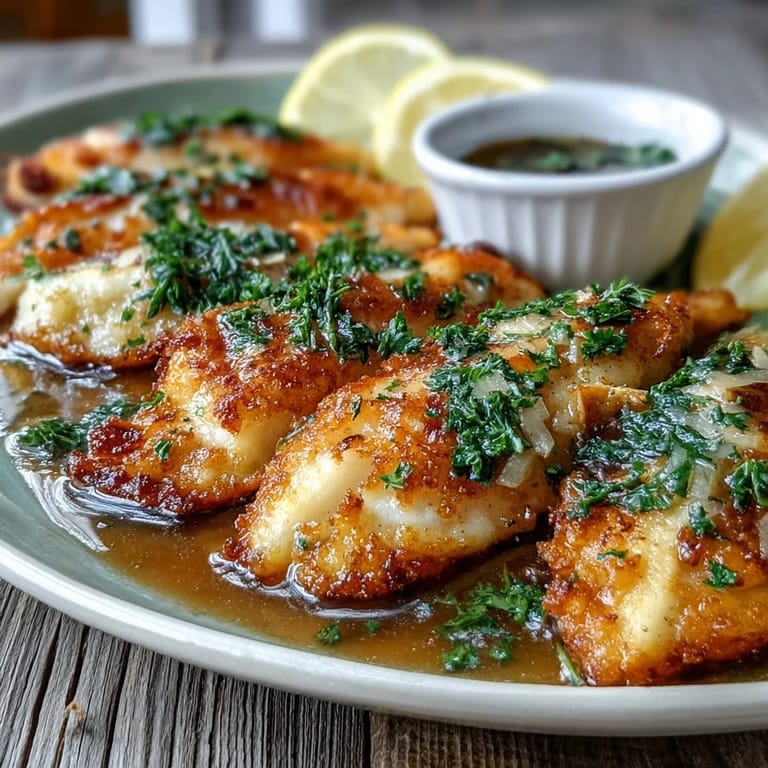
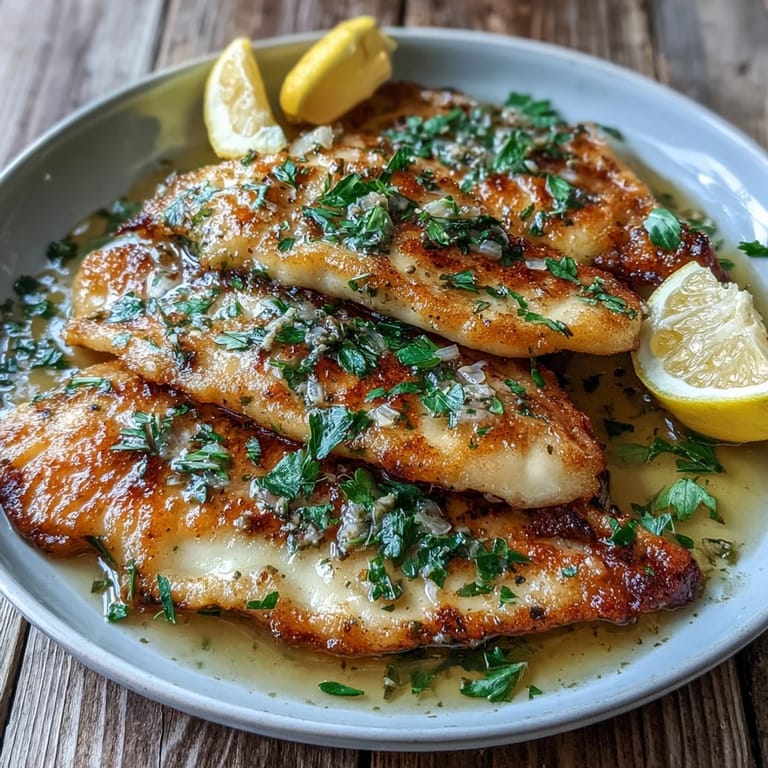
- Remove the pan from heat and stir in the lemon juice and parsley immediately, then spoon this warm, foamy sauce directly over the hot fish.
- Serve without delay:
- This dish is best eaten the moment it's finished, while everything is hot and the butter is still glossy.
 Pin It
 There's a moment in cooking this dish where everything comes together at once—the butter bubbling, the parsley catching the heat, the steam rising from the hot fish—and it feels like pure possibility. That's when you realize cooking isn't about complexity; it's about being fully present for a few perfect minutes.
The Browned Butter Secret
The browned butter is truly where this dish transcends simplicity. Milk solids sink to the bottom of the pan and toast slowly, developing those toasted, almost sweet nutty flavors that can't be rushed. Many home cooks make this sauce too quickly or don't give it enough heat, ending up with butter that's simply melted rather than transformed. The moment you smell that nutty aroma, you've hit the sweet spot—pull it off the heat immediately because it continues cooking in its own residual heat.
Fish Doneness Without Guessing
Flounder is lean fish with delicate, flaky meat that dries out faster than thicker fish like salmon or halibut. The best indicator of doneness isn't timing but observation—watch the flesh as it cooks and you'll see it transition from translucent to opaque white, and at that exact moment, you're finished. If you're nervous, remember that residual heat continues cooking for another 30 seconds or so after you plate it, so it's better to undercook slightly than overdo it.
Variations and Pairing Thoughts
While Dover sole is the classic choice and tastes incredibly similar, I've made this with tilapia on nights when flounder wasn't available, and it's equally delicious if slightly firmer in texture. The sauce transforms whatever white fish you use into something special. Serve this alongside steamed green beans dressed with nothing but a tiny bit of good butter, or roasted new potatoes tossed with fresh herbs—you want the plate to feel light and refined, not heavy.
- If you love white wine, add a splash to the pan before the butter browns for deeper, more complex sauce.
- Fresh herbs like tarragon or chervil work beautifully instead of parsley if you have them on hand.
- This dish comes together so quickly that timing your sides is key—have everything else ready before you start cooking the fish.
 Pin It
 This recipe taught me that French cooking isn't about intimidation but about respect for good ingredients and clean technique. It's the kind of dish that reminds you why cooking at home matters.
Recipe FAQs
- → What does meunière mean?
Meunière is French for "miller's wife," referring to the traditional technique of dredging fish in flour before cooking. The flour creates a light, crispy coating while the browned butter sauce adds rich, nutty flavor.
- → Can I use other fish besides flounder?
Absolutely. Dover sole, tilapia, trout, or any mild white fish fillets work beautifully. Just adjust cooking time slightly based on thickness—thinner fillets will cook faster than thicker ones.
- → How do I know when the butter is properly browned?
Watch for the butter to turn golden-amber and develop a nutty aroma. You'll see golden brown specks at the bottom of the pan. This takes about 2-3 minutes over medium heat—don't walk away as it can burn quickly.
- → Why add lemon juice off the heat?
Adding lemon juice while the pan is still on the heat can cause splattering and bitter flavors. Removing from heat first allows the citrus to meld smoothly with the browned butter, creating a perfectly balanced sauce.
- → Can I make this gluten-free?
Yes. Simply substitute rice flour, almond flour, or a gluten-free all-purpose blend for the wheat flour. The coating technique remains the same, and the result will be equally delicious.