 Pin It
 My coworker Sarah mentioned offhandedly that she'd been meal prepping salmon on sheet pans, and I remember thinking it sounded boring until she described the kitchen filling with this buttery, herbaceous aroma while the vegetables turned golden at the edges. That same week, I tried it myself, and suddenly I understood why she was so enthusiastic—everything roasts together, the salmon stays impossibly moist, and cleanup is laughably easy. It became my go-to when I wanted to feel like I'd made something impressive without actually spending my whole evening in the kitchen.
I made this for my dad when he was going through a phase of trying to eat healthier, and he actually came back for seconds without making his usual dad comments about missing butter. Watching him try to catch a cherry tomato that rolled across his plate reminded me that the best meals are the ones that sneak nutrition in while you're too busy enjoying yourself to notice.
Ingredients
- Salmon fillets (4 fillets, 5–6 oz each): Look for fillets that smell briny and fresh, not fishy—that's your first clue they're worth cooking. Pat them completely dry before oil touches them, or you'll steam them instead of roast them.
- Olive oil (3 tablespoons total): Use something you actually like the taste of, because it matters here more than in recipes where it hides. I switched from super cheap oil to a mid-range brand and noticed the difference immediately.
- Lemon zest: Microplane it fresh right before cooking—bottled lemon zest loses its punch and tastes faintly plastic by comparison.
- Red onion (1 medium): The wedges won't fall apart if you cut them thick and keep the root end intact, which is secretly the whole technique here.
- Carrots (2 medium): Slice them uniform in thickness so they roast evenly; thinner pieces will crisp up while thick ones stay creamy inside.
- Bell peppers (1 red, 1 yellow): The colors don't just look pretty—they actually have slightly different flavor profiles, with the red being sweeter and the yellow more grassy.
- Zucchini (1 small): Half-moons work better than rounds because they lay flatter and catch more heat, turning golden instead of steaming.
- Cherry tomatoes (1 cup, halved): These release their liquid as they cook, creating a light, natural sauce that pools around everything else on the pan.
- Dried Italian herbs (1 teaspoon): If you have fresh herbs lying around, use those instead—just toss them on right before serving so they don't turn into papery ghosts in the oven.
- Fresh parsley (2 tablespoons, chopped): This is your finishing touch, the thing that makes it feel intentional rather than just reheated.
- Salt and pepper: Use more than you think feels right; roasting vegetables needs a generous hand with seasoning.
- Lemon wedges: These are non-negotiable—they brighten everything and let people adjust the tartness to their own preference.
Tired of Takeout? 🥡
Get 10 meals you can make faster than delivery arrives. Seriously.
One email. No spam. Unsubscribe anytime.
Instructions
- Heat your oven and prep the pan:
- Get the oven to 425°F and line a large sheet pan with parchment or foil—this is the one step that determines whether you're cleaning baked-on fish or just tossing paper. Think of this as setting yourself up for success from the start.
- Season and spread the vegetables:
- Toss your cut vegetables with 2 tablespoons olive oil, the Italian herbs, and a generous pinch of salt and pepper in a bowl, then spread them in a single layer on the pan. They should have some breathing room so they roast instead of steam.
- Give the vegetables a head start:
- Pop the pan in the oven for 10 minutes—the vegetables need this time to soften slightly and start releasing their water, which will help them caramelize. You'll notice the kitchen starting to smell amazing around minute 8.
- Prepare the salmon while vegetables roast:
- Pat your salmon fillets completely dry with paper towels, which is the unglamorous but essential step that prevents them from sticking. Brush them with a thin layer of olive oil and season generously with lemon zest, salt, and pepper.
- Add the salmon to the pan:
- Pull the pan out after 10 minutes, gently nestle the salmon fillets among the vegetables, and return everything to the oven. The vegetables will be partially cooked, which means the salmon and veggies will finish at roughly the same time.
- Finish roasting until salmon flakes:
- Roast for 12–15 minutes—the salmon is done when you can easily pull a piece away with a fork and it looks opaque all the way through. If you like your salmon more cooked, stay on the longer end; if you prefer it barely done, check at 11 minutes.
- Garnish and serve:
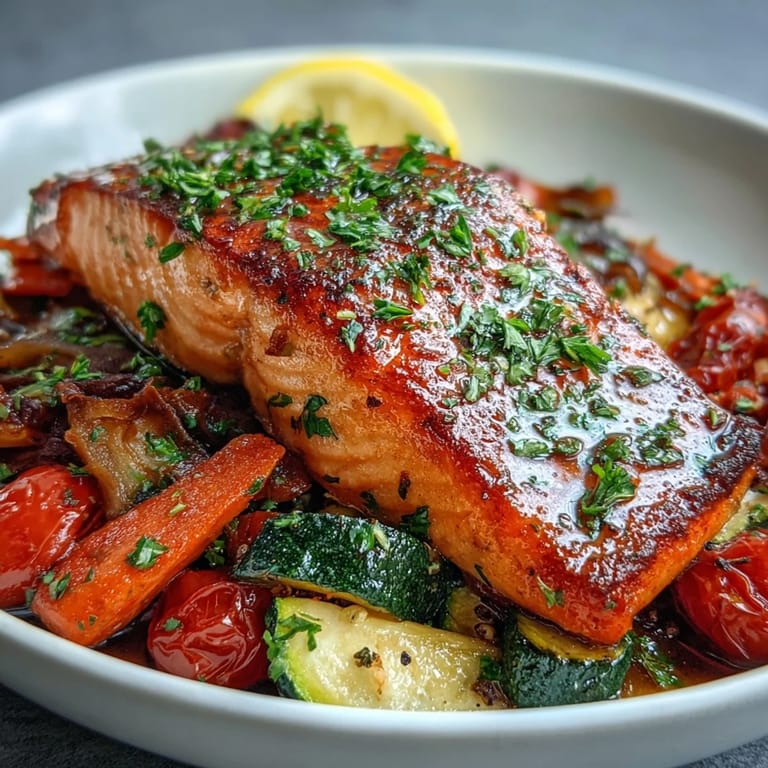
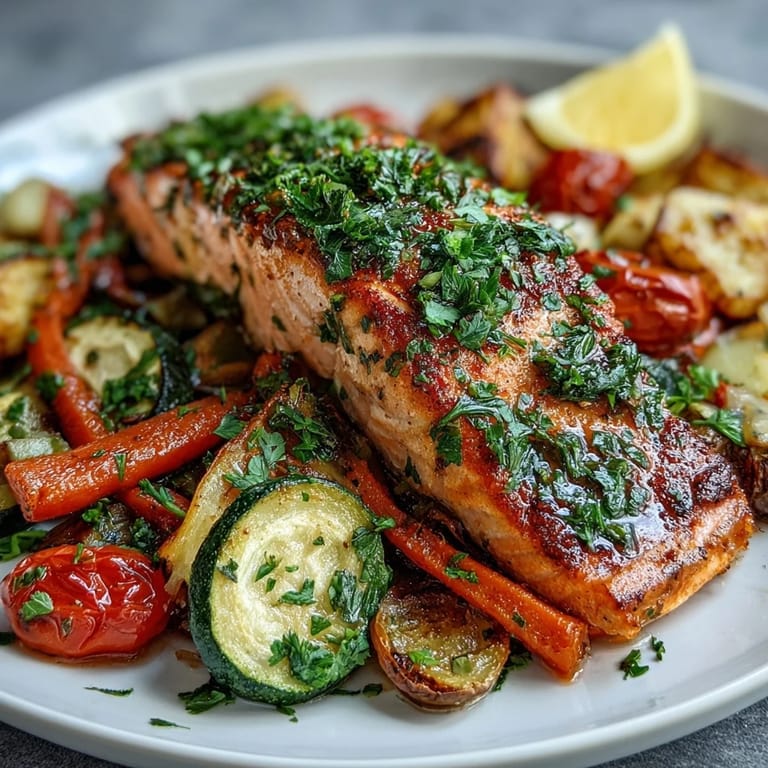
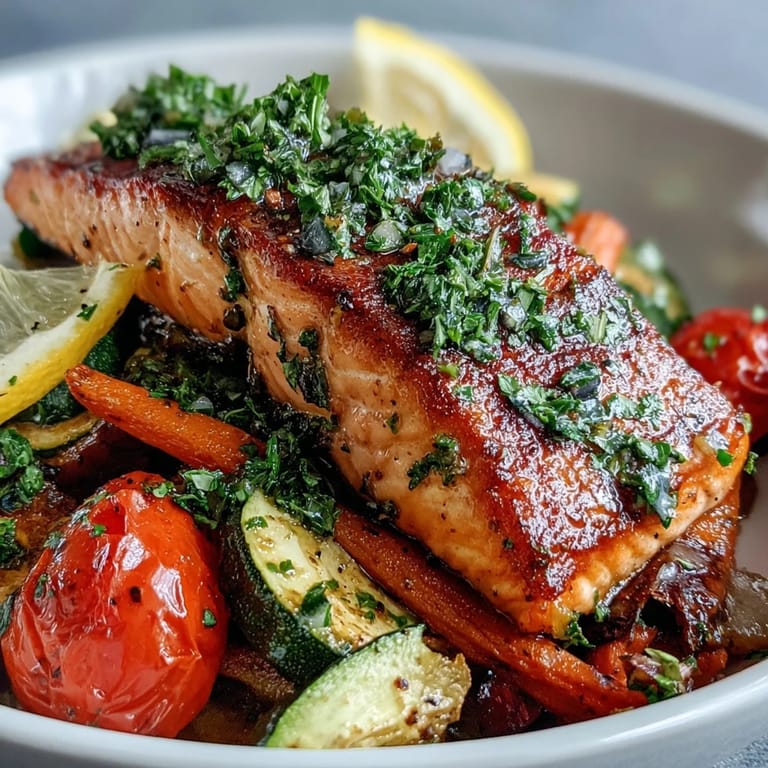
- Pull the pan out, scatter fresh parsley over everything, and set lemon wedges on the side. The whole thing should look vibrant and feel like you actually tried, even though you barely did anything.
 Pin It
 There's something deeply satisfying about setting a beautiful, steaming sheet pan in the middle of a table and watching people realize they're about to eat something that's actually good for them. This dish has a way of making weeknight cooking feel a little bit special.
Swapping Vegetables and Staying Flexible
The vegetables here are more of a suggestion than a rule, which is partly why I come back to this recipe so often. Asparagus works beautifully if you toss it on with the salmon (it needs less time than the denser root vegetables). Broccoli gets wonderfully crispy at the edges but can turn bitter if you're not careful, so watch it after the 20-minute mark. Even sweet potatoes work if you cut them thin and give them a couple extra minutes. I've learned to follow the density rule: denser vegetables go in first, delicate ones join the salmon.
Building Flavor Without Extra Calories
One evening I drizzled a tiny bit of balsamic glaze over the finished dish right before serving, and it transformed how everything tasted—suddenly the tomatoes felt more sophisticated and the salmon had an unexpected depth. Feta cheese works similarly; just a light sprinkle adds enough richness that you feel indulged without making the meal heavy. The lemon wedges do more work than you'd expect, so don't let people skip them.
Pairing and Timing Tips
This meal comes together in about 40 minutes from start to finish, so it's genuinely weeknight-friendly even if you're not someone who meal preps. A crisp white wine like Sauvignon Blanc cuts through the richness of the salmon and complements the vegetables perfectly, but honestly, cold sparkling water with a lemon wedge is just as satisfying if you're not drinking. The pan is still hot when you pull it out, so give everything a minute to cool slightly before plating—it actually tastes better and people won't burn their mouths.
- Prep your vegetables while the oven preheats so you're not rushing once the cooking starts.
- Keep the salmon fillets roughly the same thickness so they cook evenly across the pan.
- Serve this straight from the pan if you want to feel effortlessly casual, or plate it nicely if you're trying to impress someone.
 Pin It
 This is the kind of meal that made me stop seeing weeknight cooking as a chore and start seeing it as a chance to do something right by myself and whoever I'm feeding. It's honestly become a weekly rotation in my kitchen.
Recipe FAQs
- → What vegetables work best in this bowl?
Red onions, carrots, bell peppers, zucchini, and cherry tomatoes roast beautifully together. You can easily swap in seasonal favorites like asparagus, broccoli florets, or sweet potato cubes based on what's available or what your family enjoys most.
- → How do I know when the salmon is perfectly cooked?
The salmon is done when it flakes easily with a fork and reaches an internal temperature of 145°F (63°C). The flesh should appear opaque throughout and slightly translucent in the center. Overcooking will make it dry, so start checking at the 12-minute mark.
- → Can I prepare this ahead of time?
You can chop all vegetables up to a day in advance and store them in airtight containers in the refrigerator. The salmon is best seasoned just before cooking to maintain optimal texture and flavor, but having the vegetables prepped makes assembly incredibly quick.
- → What sides pair well with this dish?
This bowl is quite complete on its own, but you could serve it over fluffy quinoa, brown rice, or cauliflower rice for extra heartiness. A crisp green salad with vinaigrette or some crusty gluten-free bread also makes lovely accompaniments.
- → How should I store leftovers?
Store leftover components in separate airtight containers in the refrigerator for up to 2 days. When reheating, warm the vegetables at 350°F (175°C) for about 10 minutes, then add the salmon for just 3-4 minutes to prevent drying out. The salmon is best enjoyed fresh.