 Pin It
 Wednesday nights used to feel rushed until I discovered this sheet pan method—suddenly, dinner for four wasn't a three-ring circus of pots and pans. The steak sizzles while vegetables caramelize below, and by the time rice finishes its gentle steam, everything comes together as if choreographed. My kitchen smelled incredible, my family actually sat down together, and cleanup took minutes instead of the usual evening negotiation. This bowl became my secret weapon for making weeknight cooking feel less like an obligation and more like something I'd actually choose to do.
I made this for my sister's surprise dinner, and watching her face when I set down a bowl that looked restaurant-quality but tasted unmistakably homemade—that moment reminded me why I cook. She asked if I'd ordered it, genuinely confused that this had come from my oven. Since then, it's become the dish I reach for when I want to impress without stress, when the stakes feel a little higher but my energy is running low.
Ingredients
- Sirloin or flank steak (1 lb): Choose a cut with visible marbling—those thin white lines are flavor and juiciness waiting to happen, and they render beautifully in high heat.
- Olive oil (3 tbsp total): Don't use your expensive finishing oil here; regular olive oil has a higher smoke point and won't bitter under the oven's intense heat.
- Kosher salt and black pepper: These two deserve respect—they're the difference between a steak that tastes like itself and one that tastes incomplete.
- Garlic powder (1 tsp): Fresh garlic would burn at this temperature, but garlic powder caramelizes and deepens, adding savory backbone.
- Red and yellow bell peppers, red onion, zucchini: This rainbow isn't just pretty; each vegetable has a different sugar content, so they caramelize at slightly different rates, creating layers of flavor.
- Cherry tomatoes (1 cup): Their high water content steams slightly while their exterior chars—they become little pops of concentrated sweetness.
- Dried Italian herbs and smoked paprika: These aromatics bloom in the heat and smoke, giving the vegetables a depth that feels more composed than just roasted.
- Jasmine or basmati rice (1 ½ cups): Jasmine has a delicate floral note; basmati is more assertive and separate-grained—pick based on your mood.
- Water or low-sodium broth: Broth adds subtle richness, but water lets the steak and vegetables be the stars; choose based on what you're after.
- Soy sauce or tamari: A drizzle at the end bridges all the flavors together, adding umami salt that ties the whole bowl into one cohesive bite.
Tired of Takeout? 🥡
Get 10 meals you can make faster than delivery arrives. Seriously.
One email. No spam. Unsubscribe anytime.
Instructions
- Set your stage:
- Preheat the oven to 425°F and line your sheet pan with parchment or foil—this isn't about fancy; it's about preventing a baked-on mess that'll haunt you later. Hot oven, lined pan, ready mind: this is how you stay in control.
- Season the steak:
- Pat your steak dry with a paper towel first (moisture is the enemy of a good crust), then coat generously with olive oil, salt, pepper, and garlic powder. Let it sit for five minutes while you prep the vegetables—this brief rest lets the seasoning adhere properly.
- Toss the vegetables:
- In a large bowl, combine all your cut vegetables with olive oil, Italian herbs, smoked paprika, salt, and pepper until everything glistens and smells herbaceous. The oil coats every surface, ensuring even caramelization rather than dry spots.
- Arrange and position:
- Spread vegetables in a single layer across your sheet pan, then nestle the steak on top where it can touch the hot pan and develop a crust. The vegetables underneath will steam and caramelize simultaneously.
- Roast with intention:
- Place the pan in your preheated oven for 15–18 minutes for medium-rare—the steak's internal temperature should reach about 130°F. If you want extra caramelization on top, run it under the broiler for 2–3 minutes, watching carefully so nothing chars into bitterness.
- Prepare the rice in parallel:
- While everything roasts, rinse your rice under cold water until the water runs mostly clear, which removes excess starch and prevents mushiness. In a saucepan, bring rice, water or broth, and salt to a boil, then reduce heat to low, cover, and let it simmer undisturbed for 12–15 minutes.
- Rest and release:
- When the steak emerges from the oven, transfer it to a cutting board and let it rest for five minutes—this allows the juices to redistribute so they stay in the meat instead of running out onto your plate. Slice thinly against the grain, which shortens the muscle fibers and creates tenderness.
- Compose the bowls:
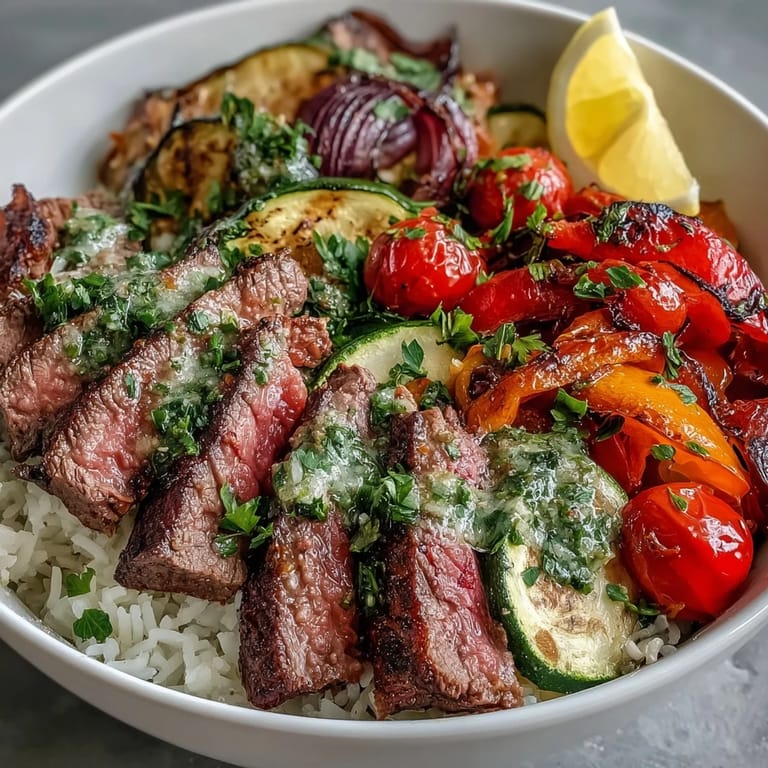
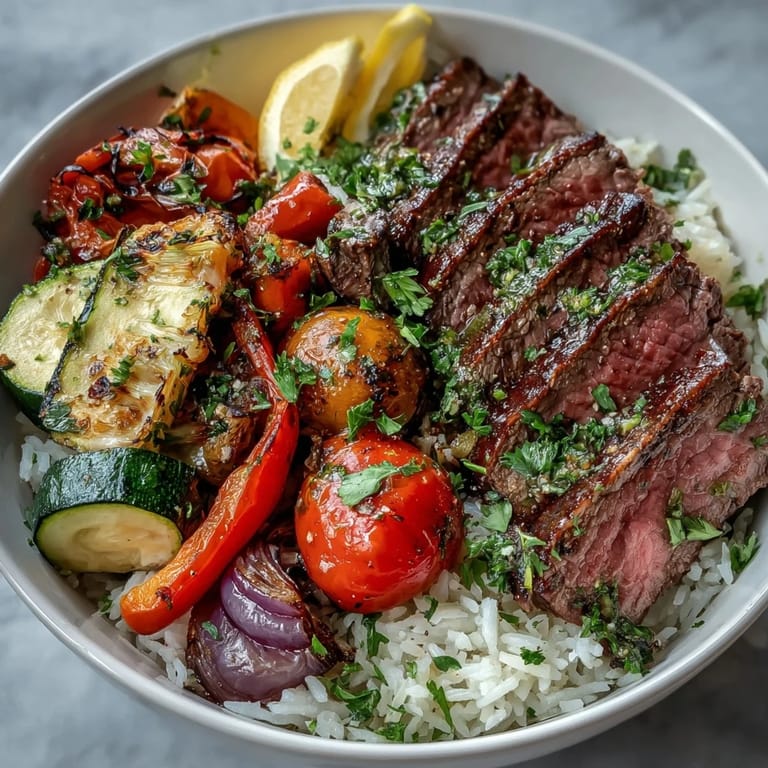
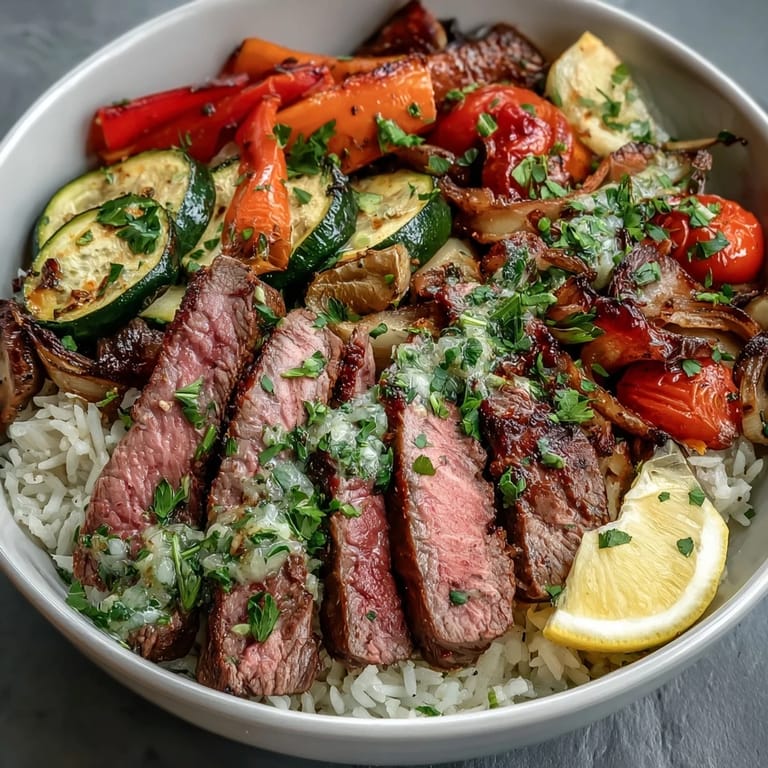
- Divide warm rice among bowls as your base, top with roasted vegetables and their caramelized edges, then arrange steak slices on top. Finish with a drizzle of soy sauce, fresh herbs, and a squeeze of lemon to brighten everything.
 Pin It
 My neighbor once asked how I made this, and when I walked her through it, she realized she'd been overcomplicating dinner for years. Now whenever she texts that she's had a chaotic day, I know she's making this bowl—something about it feels healing, like proof that good food doesn't require suffering.
Why This Method Actually Works
The oven's dry, even heat does something that stovetop cooking can't—it caramelizes the steak's exterior while gently cooking the interior, and simultaneously caramelizes vegetables without requiring you to babysit anything. The vegetables' natural moisture creates a microclimate of steam mixed with dry heat, browning them on their cut surfaces while keeping them tender inside. By timing the rice to finish exactly when everything else lands, you avoid the usual cascade of reheating and temperature management.
Substitutions That Still Shine
Chicken breast works beautifully here—pound it thin so it cooks in the same 15–18 minutes as the steak, or cut it into thick strips and check it reaches 165°F internally. Tofu pressed and cubed will absorb the seasonings and develop a slight crust, though it needs only about 12 minutes. For vegetables, broccoli florets, mushrooms, and snap peas all roast well on this timeline; just cut everything to roughly the same size so nothing finishes while something else is still raw.
- Swap the rice for quinoa if you want more protein and a nuttier grain.
- Use cauliflower rice for a lower-carb version, though toss it in at the last 5 minutes so it doesn't dry out.
- Leftover rice works too—just spread it on a second pan and warm it through while the steak roasts.
Serving and Pairing Ideas
This bowl is naturally gluten-free if you use tamari instead of soy sauce, making it a reliable choice for mixed dietary tables. Serve it with a light red wine like Pinot Noir or even a crisp white if you want something fresher. Leftovers assemble beautifully—cold the next day, it becomes a lunch that tastes intentional rather than reheated.
 Pin It
 This recipe taught me that efficiency isn't the enemy of good food—sometimes it's the secret to making dinners that feel both nourishing and joyful. If you're standing in your kitchen wondering what to cook, this bowl might be exactly the answer you're looking for.
Recipe FAQs
- → What cut of steak works best?
Sirloin and flank steak both work beautifully. Sirloin offers tenderness while flank delivers rich beefy flavor. Slice against the grain for the most tender results.
- → Can I prep this ahead?
Yes! Chop vegetables and season the steak up to 24 hours in advance. Store in separate containers in the refrigerator until ready to roast.
- → How do I know when the steak is done?
Use an instant-read thermometer. Medium-rare reaches 130-135°F, medium 140-145°F. Remember the steak will continue cooking slightly while resting.
- → What vegetables can I substitute?
Broccoli florets, sliced mushrooms, sweet potato cubes, or asparagus work great. Just adjust roasting time based on vegetable thickness.
- → Can I make this without rice?
Absolutely. Try quinoa, cauliflower rice, or serve over greens for a lighter version. The roasted flavors pair well with any base.
- → How should I store leftovers?
Keep components separate in airtight containers for up to 3 days. Reheat steak gently to avoid overcooking. Vegetables can be eaten cold or warmed.