 Pin It
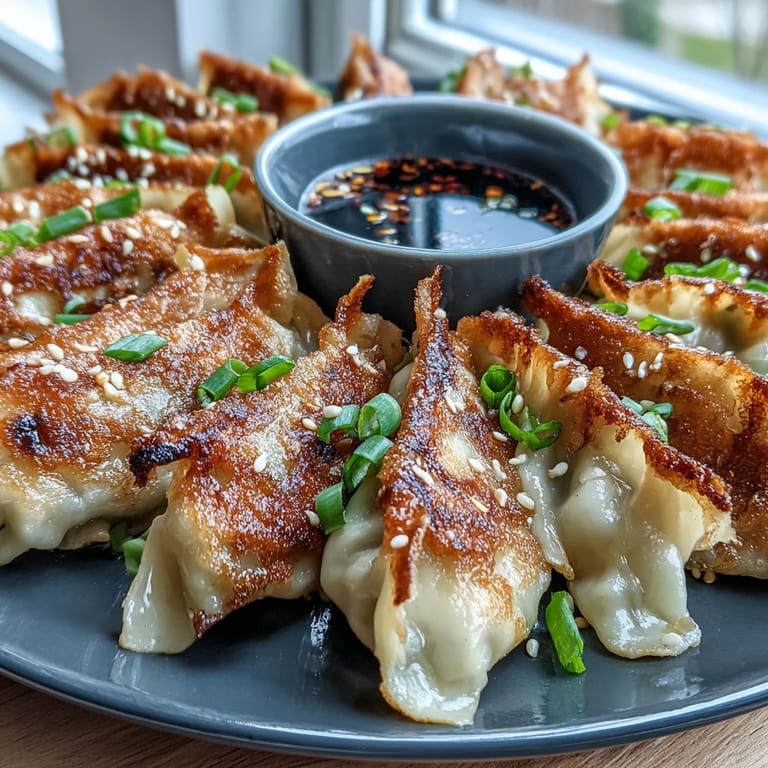
 My neighbor showed up one Tuesday evening with a bag of wonton wrappers and a mischievous grin, insisting we needed to make dumplings but without the fussy pleating. We ended up smashing them flat, pan-frying them until golden, then steaming them in the same skillet—and somehow this beautifully lazy shortcut became the version I make now every other week. It's the kind of cooking that feels like you're breaking the rules, except everyone shows up asking for more.
The first time I made these for my book club, I was nervous the premade wrappers wouldn't work, but the moment those gyozas hit the hot pan and started sizzling, the whole kitchen smelled so good that everyone abandoned their drinks and moved to the kitchen counter. Three batches later, there were none left, and I realized I'd stumbled onto something that felt fancy but genuinely easy.
Ingredients
- Ground pork (200 g): The classic choice that keeps the filling rich and flavorful; chicken works just as well if you prefer something leaner.
- Napa cabbage (1 cup, finely shredded): The secret to texture and moisture, it stays crisp even after cooking if you don't overwork the filling.
- Green onions (2, finely sliced): Fresh, sharp notes that cut through the richness and wake up every bite.
- Garlic (2 cloves, minced): Mince it small so it distributes evenly; there's nothing worse than biting into a huge chunk mid-gyoza.
- Soy sauce (1 tbsp for filling): Use a good quality one since it's doing heavy lifting here; it's worth the small splurge.
- Sesame oil (1 tbsp): Just a tablespoon—this stuff is potent and a little goes a long way toward authentic flavor.
- Fresh ginger (1 tsp, grated): Grate it on a microplane right before mixing so it stays bright and doesn't oxidize.
- Sugar (1/2 tsp): This tiny bit balances the salty soy and makes the whole filling taste rounder.
- Black pepper (1/4 tsp): Freshly cracked tastes noticeably better than pre-ground here.
- Wonton wrappers (16 store-bought): These are your time-saver; keep them in the fridge and they last weeks, making last-minute appetizers possible.
- Neutral oil (2 tbsp total): Canola or sunflower oil won't burn at the high heat needed for that golden crust.
- Water: For both sealing edges and steaming—keep a small bowl nearby while you're working.
- Soy sauce (2 tbsp for dipping): This becomes your dipping sauce base, so a good one matters here too.
- Rice vinegar (1 tbsp): The acidity brightens the sauce and cuts through the richness of the gyozas.
- Chili oil (1 tsp, optional): For those who like heat; drizzle it in after tasting if you're unsure.
- Toasted sesame seeds (1/2 tsp): Toast them yourself in a dry pan for about 30 seconds if you have time; the flavor jumps dramatically.
Tired of Takeout? 🥡
Get 10 meals you can make faster than delivery arrives. Seriously.
One email. No spam. Unsubscribe anytime.
Instructions
- Build your filling:
- Combine the pork, cabbage, green onions, garlic, soy sauce, sesame oil, ginger, sugar, and pepper in a bowl and mix until everything is evenly distributed. The mixture should feel slightly sticky but not wet.
- Assemble the gyozas:
- Lay your wonton wrappers out on a clean, dry surface and place about one heaping teaspoon of filling in the center of each. Wet your fingertip with water and trace the edges of the wrapper, then fold it over to form a half-moon shape and press down gently to seal.
- Smash and flatten:
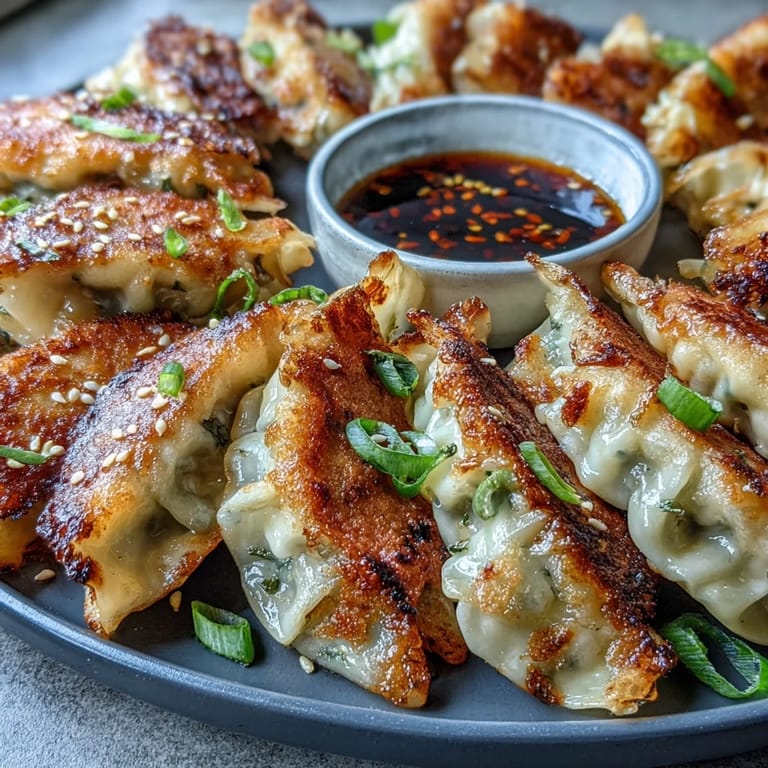
- Once sealed, use the heel of your palm to gently flatten each dumpling slightly, pressing down on the filling side so the whole thing becomes more compact and will sit flat in the pan. This step is what gives them that restaurant-quality appearance.
- Pan-fry the first batch:
- Heat 1 tablespoon of oil in your largest nonstick skillet over medium-high heat until it's shimmering. Place half the gyozas flat side down and let them cook undisturbed for 2 to 3 minutes until the bottoms are deep golden brown.
- Steam until tender:
- Once the bottoms are golden, add 2 tablespoons of water to the pan, immediately cover with a lid, and reduce heat to medium. The steam will cook the wrappers and filling through in about 2 to 3 minutes; you'll see the wrappers turn translucent.
- Re-crisp the bottoms:
- Remove the lid and let any remaining water evaporate, then cook for one more minute to restore crispness to the bottoms. Transfer to a plate and repeat the entire process with the remaining gyozas and oil.
- Make your dipping sauce:
- While the second batch cooks, whisk together the soy sauce, rice vinegar, chili oil if using, and sesame seeds in a small bowl. Taste and adjust; if it feels too salty, a splash more vinegar helps balance it.
- Serve immediately:
- Bring everything to the table while the gyozas are still warm and the bottoms are still crispy. Serve alongside the dipping sauce.
 Pin It
 My son came home from school one day asking if I could teach him to make these, and watching him carefully seal each gyoza and then grin when the first batch came out perfect was one of those quiet kitchen moments that sticks with you. Since then, gyoza night has become his thing, and he invites friends over knowing he can pull it off in 30 minutes flat.
Why These Beat Traditional Dumplings
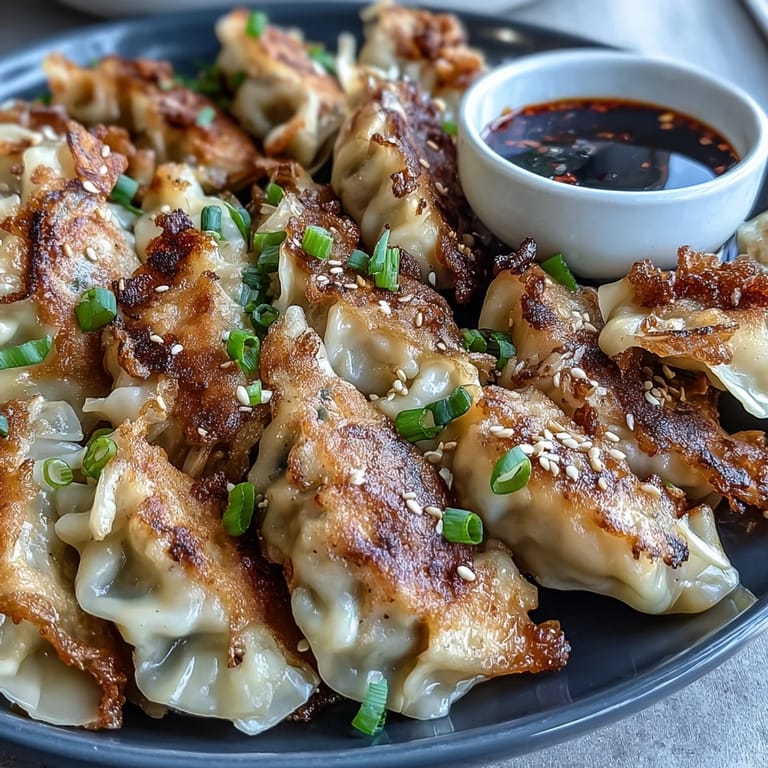
Listen, I love a properly pleated dumpling, but these smashed gyozas exist in this beautiful middle ground where you get restaurant quality without the learning curve or the sore fingers. You're working with a sturdy wrapper that's forgiving if you're not gentle, and the flat shape means maximum surface area touching the pan, which equals more crispy edges and fewer soggy spots. The steam-then-crisp technique ensures the filling cooks through without the wrapper becoming tough.
Filling Flexibility
The moment I realized this filling works with almost any protein or vegetable combination, these dumplings became part of my regular cooking rotation instead of a special occasion thing. Ground turkey makes them leaner, tofu versions work beautifully for vegetarian guests, and I've added everything from finely minced shrimp to mushrooms without ever missing the traditional pork. The sesame oil and soy sauce anchor the flavor no matter what you swap in, so the basics stay constant while the filling evolves based on what's in your fridge.
Building Flavor in the Sauce
The dipping sauce is where you can get creative once you've made the basic version a few times, because you'll start to understand what each component does and how they balance each other. Some nights I add a touch of sesame paste for richness, other times I go heavier on the chili oil if I'm cooking for people who love heat, and occasionally I add a tiny bit of honey to round out the edges. The sesame seeds aren't just decoration—they add texture and a toasted nuttiness that makes the sauce feel complete.
- Toast your own sesame seeds in a dry pan right before making the sauce for maximum flavor impact.
- Don't mix the sauce until just before serving or the sesame seeds will settle to the bottom.
- Any leftover sauce keeps in the fridge for a week and pairs with other dishes like pan-fried fish or noodles.
 Pin It
 There's something deeply satisfying about taking shortcuts that don't sacrifice taste or texture, and these smashed gyozas taught me that sometimes the best versions of dishes are the ones that happen when you stop trying so hard. Make these whenever you need something that feels special but doesn't demand hours in the kitchen.
Recipe FAQs
- → What makes smashed gyozas different from regular dumplings?
Smashed gyozas are flattened before cooking, creating more surface area for crispy bottoms. This unique technique gives you more crunch in every bite compared to traditional pleated dumplings. The flatter shape also cooks faster and more evenly.
- → Can I make these ahead of time?
Yes! Assemble uncooked gyozas and freeze them in a single layer on a baking sheet. Once frozen, transfer to a freezer bag. Cook frozen gyozas directly from the freezer, adding 1-2 extra minutes to the steaming time. They'll taste just as fresh.
- → What can I use instead of wonton wrappers?
Gyoza wrappers work best if available, but dumpling skins or even spring roll wrappers can be substituted. Wonton wrappers tend to be thinner, so they get extra crispy. For gluten-free options, look for rice paper wrappers or make a simple dough with rice flour.
- → How do I get the crispiest bottoms?
The key is using enough oil and medium-high heat for the initial sear. Don't overcrowd the pan, and let them cook undisturbed until golden. The water steaming step is crucial for cooking the filling, then removing the lid helps re-crisp any softened spots.
- → Can I make vegetarian smashed gyozas?
Absolutely! Substitute ground pork with crumbled firm tofu, finely chopped mushrooms, or mashed sweet potato. Add extra vegetables like carrots, spinach, or water chestnuts for texture. Increase soy sauce and aromatics to compensate for the missing pork flavor.
- → What's the best dipping sauce combination?
The classic soy and rice vinegar blend is perfect. Add chili oil for heat, or substitute with sriracha. Other great additions include minced garlic, fresh ginger, scallions, or a drop of sesame oil. Ponzu sauce also pairs beautifully with the crispy bottoms.